Friday, 24 October 2014

Film Ratings


U - Universal, suitable for all.
PG - Parental Guidance
12 - Video release suitable for over 12's.
12A - Cinema release suitable for 12 years and over.
15 - Suitable for over 15 years.
18 - Suitable for over 18 years.
R18 - Adult works for licensed premises only.


Film ratings are used to limit the age of the viewers' based on the content in the film.
 
The BBFC (British Board of Film Classification) says it:
 
"Publishes short but detailed information about all the films and videos we rate.... It gives parents a clear idea of how and why films have been rated and what the films contain."

Film producers give their film a rating which must be approved by the BBFC, they can up or lower the rating if they feel it to be necessary. If films do not receive their desired rating, this can effect their audience figures. For example, if a 15 rated film was intended to be a 12, this restricts a group of people who are under 15, but are older than 12 so they would have been able to see the film if it was a 12, therefore the film would generate a lower profit.
 

Wednesday, 22 October 2014

Comprehending Time

In films, on screen stories are generally not taken in real time. Films usually present whole lives of a person in an hour and a half. There are different techniques that directors can use to show time passing, e.g. time/date information typed up on screen, a flash forward or flash back, repetition, reverse motion and freeze frame. 
 
Another technique used in story telling is 'dream sequences'. This sets a brief break from the main story of the film and includes a convincing dream which turns out to be false. 

A flash forward transitions the narrative further into the future. These are used to represent events that could happen, whereas flash backs view events that have already happened that are being looked back on to give further depth to a narrative. 


The film 'Click' (2006) includes many flash forwards as the plot of the film is all about the manipulation of time and representations of future events that could happen unless the main character makes some changes to his current life. 

Audience Positioning

Positioning the Audience in Films Via Different Shots

Shot-Reverse-Shot: allows the audience to feel a part of a conversation.

POV Shot: allows the audience to see from the perspective of a character.

Birds-Eye Shot: allows the audience to get an overview of the scene from above it. 


Key Terms

Audience Engagement: describes how an audience interacts with a media text. Relates to Stuart Hall's theory of encoding and decoding. 

Audience Expectations: ideas that an audience has before seeing a media text.


Audience Classification

Below is a SlideShare presentation I have created which explains audience classification, including types of audience research and types of audiences/social groups. 


Demographic: age, gender, race, social status.

Psychographic: interests, hobbies, beliefs, morals attitudes.


Audience Engagement: how an audience reacts to a media text, different people have different reactions to the same text.

Audience Expectations: the ideology that an audience will have before they see a media text, for example, if they know a film's genre is action, they will expect it to be action-packed and intense.

When creating my own opening title sequence, the audience will most likely be aimed at those within the 13-25 year old age group. This is because generally this age group enjoy thriller films more than older age group who may enjoy genres such as action. Also those in education may have more free leisure time than those in full time jobs and will spend more time watching films. 

Impact of Technology on Audiences

Below is SlideShare presentation I have created that explains old and new media, and how it affects audiences. 


David Gauntlett's 'Web 2.0' Theory

David Gauntlett's theory is that the change in online media has lead to more creativity in the sense that it can easily be collaborative and has a desire to be connected. 'Media 2.0' is a term that indicates the changing focus in media due to the web. As a result, audience has moved from passive to active


Monday, 20 October 2014

Mass and Niche Audiences


Mass Audience: popular/mainstream shows, e.g. soaps, which target a broad range of people like, men, women, adults, children. 

EastEnders would have a mass audience.


Niche Audience: a smaller group of people, which is selective based on a unique interest.

Wheeler Dealers would have a niche audience.


Katz and Blumler:

Katz and Blumler found that there were 3 main elements that provided audiences with satisfaction: information, personal identity and integration and social interaction. 

Information: the use of sources to understand information about events, this gratitudes curiosity by increasing knowledge. 

Personal Identity: increases individuality, people only look up things that reinforce their own values based on their personal interests.

Integration and Social Interaction: an insight into the position of other people, this brings a sense of empathy from the viewer. For example someone may watch a TV programme or film based on something they can relate to in their own personal life


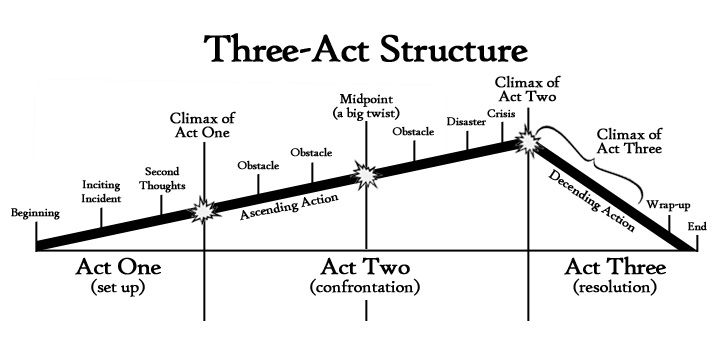
Narrative - 3 Act Structure


Act 1: is the first act of the film, usually is the first quarter of the whole film.

Act 1 sets up the film, there is an exposition which introduces the characters and lets the audience see what type of character they are. The exposition introduces the main character, the dramatic premise and the dramatic situation.

Main character: has an objective to achieve, is the main focus of the story.


Dramatic Premise: what the story is about.

Dramatic Situation: an event that sets the plot of the film, which occurs halfway through act 1.

An 'inciting incident' gets the plot of the film moving halfway through the first act. 


Act 2: is the second act of the film, it takes up half of the film. 

In act 2 there are obstacles, which prevent the main character from achieving what they need to. 

First Culmination: just before halfway through the film, the main character almost achieves their goal, however, everything falls apart before they do. 

Midpoint: the main character reaches their weakness and lowest point in the film as they seem so far away from achieving their goal. 


Act 3: is the penultimate act of the film, this is the final quarter of the film.

Climax: the plot of the film reaches its highest tension between the two opposite forces, they confront each other in an intense battle of emotional or physical action. 

Denouement: this is the short time of calmness at the end of the film where a new equilibrium is created or the equilibrium from the start of act 1 returns. 


Example of the 3 Act Structure

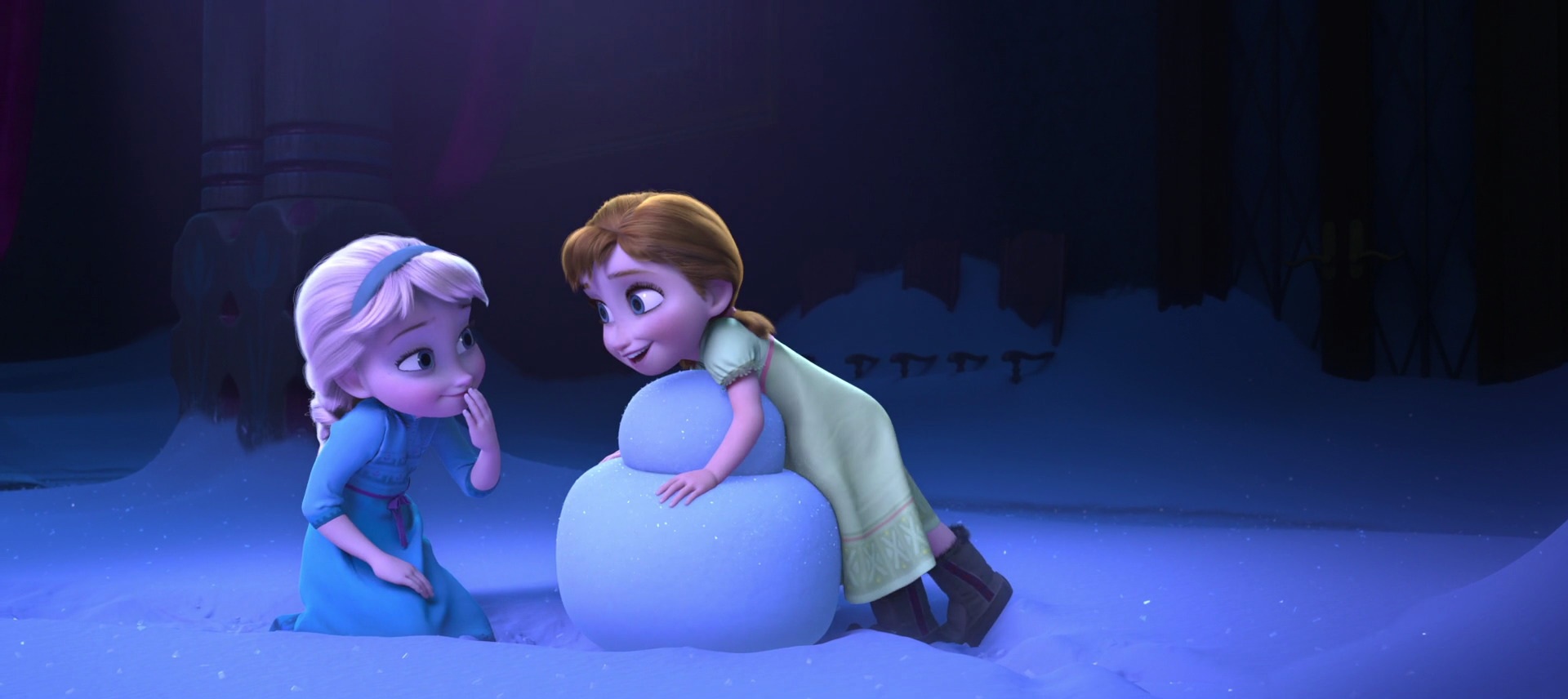
In Frozen (2013) the 3 Act Structure is present within the film. 

At the beginning of the film two young sisters playing in the snow happily and innocently. The older sister, Elsa, accidentally freezes the younger sister, Anna, and has to be isolated from her for years. They are reunited years later when the sister panics and sets off an eternal winter by her magic powers. 
- The exciting incident (Act 1)


In a desperate attempt to bring home her sister, Anna is frozen completely as Elsa's powers are too forceful. She has also been tricked by a prince claiming to love her just to become King of her kingdom, which put her life at risk as she almost could not be saved in time. 
- The Midpoint (Act 2)

In the end, both sisters are safe and Anna finds a new romance.One of the final lines is 'only love can thaw a frozen heart' which sets the new equilibrium of happiness all round.
- Denouement (Act 3)