Thursday, 16 October 2014

Narrative and It's 6 Codes


(1) Technical Code: anything 'technical' that goes into a narrative, e.g. camera, sound, design and editing. 

(2) Verbal Code: how language is used, written and spoken.

(3) Symbolic Code: clues within the narrative, e.g. someone wearing ragged clothing suggests that they are poor.

(4) Structure: Todrov's theory. Equilibrium -> Disequilibrium -> New Equilibrium 

(5) Character: protagonist (the hero), antagonist (the villain), father (authoritative figure, often rewards the hero), helper (someone who helps the hero, a sidekick), donor (gives something to the hero to help them out) mentor (teacher and gives guidance to the hero)

(6) Narrative Conflict: Levi-Strauss' theory that all narratives are moved forward by a conflict caused by opposing forces e.g. love and hate, rich and poor.

The Silence of The Lambs (1991)


The protagonist of this film is an FBI Agent, Clarice Starling. The antagonist of this film is a psychopath Hannibal Lecter. 

The equilibrium of this film is Clarice is put in charge of finding a woman who has gone missing, from a serial killer. This is represented in the opening title sequence as it starts off with an establishing shot of a dark, misty forest which suggests an eerie effect. The camera then tilts down to give an extreme long shot of a woman (Clarice) who is running through a forest and has an overall messy appearance. She is running through an intense obstacle training course, which shows determination and links to the equilibrium as she is determined to find who this serial killer is. 

There is a clue as to what Clarice does in the film in this, her sweatshirt says 'FBI Academy' which is who she works for to solve this case. 

The new equilibrium of the film is created when Clarice finds who the psychopath serial killer is by help from an unlikely source, another psychopath, Hannibal Lecter.


Saturday, 11 October 2014

Narrative, Enigma, Story and Plot

Narrative

This is how a story of a film is told. This helps the viewer to naturally make sense of things by connecting events and making inferences based on those connections. Narrative can correspond to genre because some story-lines are typical of specific genres, e.g. in a romance film, the generic story-line is 'boy gets girl, loses girl, gets girl back'. 


Narrative Enigmas

These are used to limit information that is given to the audience, which allows them to stay interested with the film as it creates curiosity and makes the audience have a guess as to what events are going to happen. 

Story and Plot

The narrative story of a film is what happens in the film.
The narrative plot of a film is what order the story is told in. 

The technique of re-arranging the events of a story makes the narrative more interesting and will mean that the audience stay engrossed. 

Friday, 10 October 2014

Why Do Genre's Change Over Time?

'Genre' is a contentious term because genres that have been named/discovered are not set in stone because there are hundreds of different sub-genres and hybrid genres.

Genres are important because it gives the audience an idea of typical characteristics of the film. For example, horror films are likely to be quite jumpy. 

The whole film industry is reliant on genres because they are generic, which means that an audience will choose to watch a film based on what genre it is, as they are more drawn towards watching their favourite film genre. 


So.... Why have genres changed over time?

Recently, the main target audience for films have become younger, known as 'juvenilisation' of the cinema. So this changes the popularity with films based on genre. 

Changes in society, ideology, beliefs and morals brings about changes in genre as a consequence. For example, since the 1970's, the influence of feminism has meant that women are now portrayed in a different way now than they were previously. 

Advances in technology have changed genre over time, as computer animation has evolved, this has brought about the genre of anime, cartoon and is widely used by Disney, using animated films to target a young audience with their fictional narratives.

Modern audiences are also exposed to more graphic images, as boundaries of scenes that are seen as 'tasteful' are challenged and widened each year by directors. 


Genre Typecasting of Actors

Typecasting: the process by which a particular actor becomes associated with either a specific character, their characters have similar traits or their characters come from the same type of social/ethnic group. 

Problems created by typecasting is that an actor/actress may become so strongly associated with playing a particular character, that it makes it difficult for them to find work in playing a different character.

Directors may however, choose to cast an actor 'against type', which would be a role that would be unusual for that actor/actress to play because their previous castings have been very different to this role. Directors chose to cast against type to create a comedic/dramatic effect.

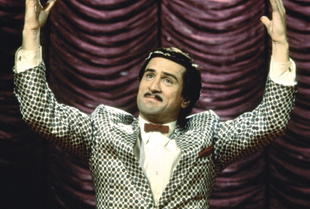
Examples of directors casting against type is where Robert de Niro was cast as the lead role in 'The King of Comedy', where he plays an aspiring comic, Rupert Pupkin. This goes againsts his commonly known typecast of the 'tough guy'.


De Niro as Rupert Pupkin in The King of Comedy (1982)
         De Niro as Johnny Boy in 'Mean Streets' (1973)


Genre of Thriller

Thriller films are amongst the most popular film genres because they keep the audience 'on the edge of their seats', which makes the film more exciting to watch. Lots of popular thriller films are in fact, hybrid genres like thriller/action/adventure. 

Alfred Hitchcock is renowned for creating thriller films, such as 'North by Northwest' (1959), 'Psycho' (1960) and 'Vertigo' (1958).

North by NorthwestPsychoVertigo

Below is a Scribd Document I have created which analyses the thriller film, 'Se7en', in terms of the narrative, iconography, characters, camerawork and setting, which give it typical conventions of a thriller.


Genre, Hybrid and Sub Genres

How have genres changed over time?

Target audiences have become younger over time, this means filmmakers have had to adapt to this audience. For example, horror films are now aimed at a teenage audience.

Western films were popular in the 1940s/50s but have now been replaced with thriller films due to better filmmaking, e.g. more special effects, graphical work, etc.

Genres have also become more popular based on specific time periods.

"Genre frames audience expectations, whereby viewers bring a set of assumptions with them and anticipate that these will somehow be met in the viewing experience. This brings audience pleasure." - Steve Neale (2003)


Hybrid Genres

This is a mixture of two or more genres. Hybrid genres are beneficial for filmmakers as if they are classified are more than one genre, it will appeal to more people.

"Most films are hybrid genres, since they possess the common attributes of more than one genre." - Warren Buckland.

Some examples of hybrid genres for thriller films include:

  • Action-thriller
  • Western-thriller
  • Suspense-thriller


Sub-Genres

These are ways of splitting a genre of a film up more specifically, it can be remembered by thinking that the genre is the 'title' of the film and the sub-genre is the 'sub-heading' of the film.

Some examples of sub-genres for thriller films include:

  • Espionage/Crime
  • Martial Arts
  • Detective/Mystery


Thursday, 9 October 2014

Defining Genre


In films, genre is where there are similarities in narrative elements of how films are constructed. This fits lots of films into different categories. 

Films in a genre have similar techniques/conventions such as, content, subject matter, structures, themes, mood, time period, plot and narrative events.


Mind Map created by Heather Larkin with ExamTime